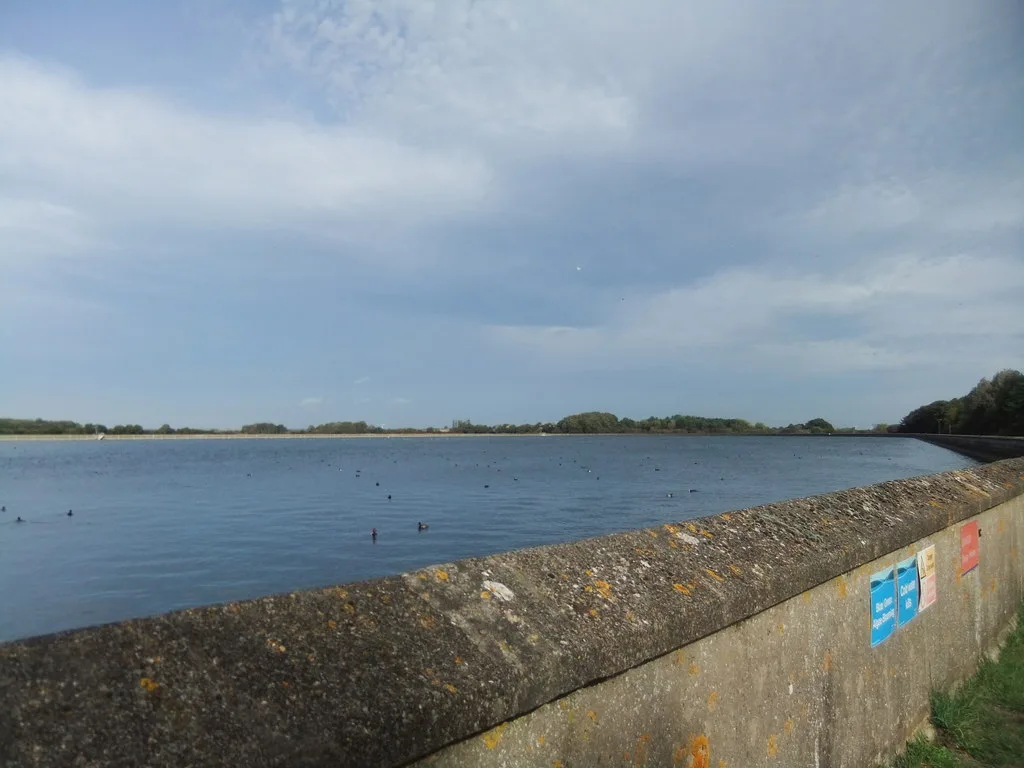

Yorkshire is in drought, and the Hull and Humber area had just 26% of its usual September rain, the region's driest. Yorkshire Water plans no hosepipe ban.
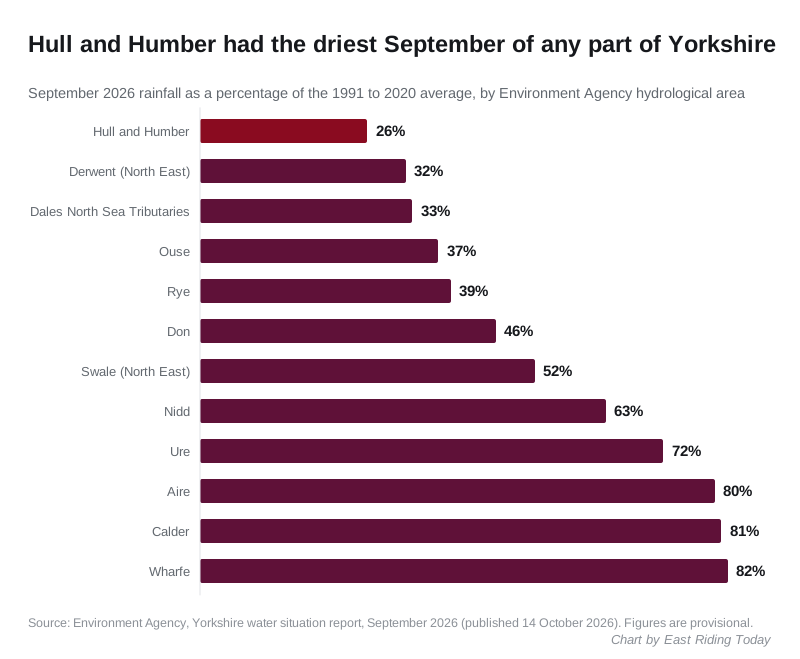
Yorkshire has been officially in drought since Friday 9 October, and the East Riding is the driest part of it. The Environment Agency’s latest figures show the Hull and Humber area had 26% of its normal September rainfall. That is the lowest of the 12 areas it measures across Yorkshire.
Yorkshire Water says it is not planning a hosepipe ban or any other restriction for customers.
The quick answer
- Drought declared: the Environment Agency moved Yorkshire into drought status on 9 October 2026, after the region’s fifth driest April to September on record.
- East Riding rainfall: the Hull and Humber area had 26% of its average September rain, rated “exceptionally low”.
- Hosepipe ban: none planned. Yorkshire Water says drought status “does not automatically mean water restrictions are required”.
- Water stored: Yorkshire Water’s reservoirs were at 42.7% on 9 October, against 52.9% a year earlier. The Hull aquifer was at 40%.
What was declared
The Environment Agency announced the change on 9 October. It said low water in reservoirs and rivers had reached its trigger for declaring a drought. Yorkshire had been in “prolonged dry weather” status since the end of July. (Environment Agency, 9 October 2026)
Yorkshire now joins all of central, southern and eastern England in drought. The North East and North West remain in prolonged dry weather.
Vicki Townend, the agency’s area environment manager for Yorkshire, said: “Even if we receive a few weeks of rain, we cannot quickly reverse the effects of the lack of rainfall during a very dry spring and summer.”
The agency says this is Yorkshire’s third drought in five years, after 2022 and 2025.
Why the East Riding stands out
The agency’s monthly report for Yorkshire, published on 14 October, splits the region into 12 hydrological areas. The Pennine areas had between 46% and 82% of their usual September rain. The eastern areas had between 26% and 39%. (Environment Agency, Yorkshire water situation, September 2026)
The report says “the Hull rainfall total for the month was exceptionally low for the time of year”. The agency uses “exceptionally low” for a value expected only about 5% of the time.
The same report records these readings in the East Riding at the end of September:
- Groundwater at Wetwang, in the Wolds chalk, was “notably low” for the time of year, down from “below normal” in August.
- Groundwater at Dalton Estate Well was “below normal” for a second month.
- West Beck at Wansford Snakeholm Lock, in the upper River Hull catchment, had “notably low” flows for a second month.
- Soils in the south and east of Yorkshire were “very dry”.
- Rainfall since April in the Hull and Humber area was “exceptionally low”.
The chalk matters here. Yorkshire Water says the Hull aquifer “supplies large parts of North and East Yorkshire”. On 24 September it put the aquifer at 42%, against an average of 48% for the time of year. (Yorkshire Water, 24 September 2026)
Yorkshire Water: no restrictions planned
Yorkshire Water responded on the day of the declaration. It said it is “not planning to introduce water restrictions for customers at this time”. (Yorkshire Water, 9 October 2026)
It gave these figures:
| Measure | 9 October 2026 | A year earlier |
|---|---|---|
| Reservoir stocks | 42.7% | 52.9% |
| Hull aquifer | 40% | 40% (early October 2025) |
The company credits leakage work and moving water around its network. Its September release listed what it has done since the hosepipe restrictions of 2025:
- new service reservoirs to store more treated water
- almost 300km of new water mains
- almost 500,000 smart meters, which it says save 16 million litres a day by finding leaks
Andy Shaw, Yorkshire Water’s head of water production, treatment and energy, said demand “remains unusually high for this time of year”. He said winter rainfall will be important for the recovery.
How long it could last
The Environment Agency points to new research. It found that all areas of England would need 120% of their long-term average rainfall over the next seven months to be considered out of drought.
Farms and businesses with licences to take water are already affected. At the end of September, 113 abstraction licences in Yorkshire had a “hand off flow” restriction in force, the agency’s report says. Another 45 licence holders had been warned that restrictions may follow.
What it means for you
- No hosepipe ban is planned. If that changes, we will report it.
- Yorkshire Water asks customers to take shorter showers, run full washing machine loads and check for leaks at home.
- Report an environmental incident to the Environment Agency’s 24-hour line on 0800 80 70 60.
- Farmers and growers who take water from the River Hull or its becks should check the conditions on their abstraction licence.
The agency publishes its next monthly report for Yorkshire in November. Our roadworks and travel page carries any burst main closures.
Sources
- Environment Agency, Environment Agency declares drought status in Yorkshire, 9 October 2026.
- Environment Agency, Yorkshire water situation: September 2026 summary and full report (PDF), 14 October 2026. All data are provisional.
- Yorkshire Water, No water restrictions expected for customers as Yorkshire moves into drought, 9 October 2026.
- Yorkshire Water, Yorkshire reservoirs start road to recovery, 24 September 2026.
Have your say